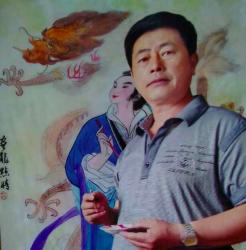
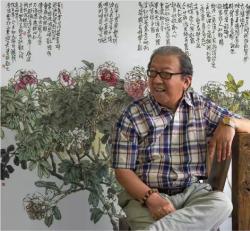
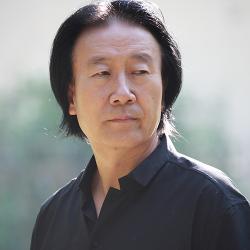
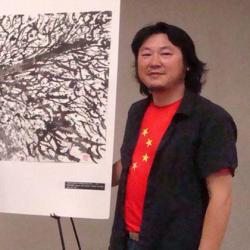
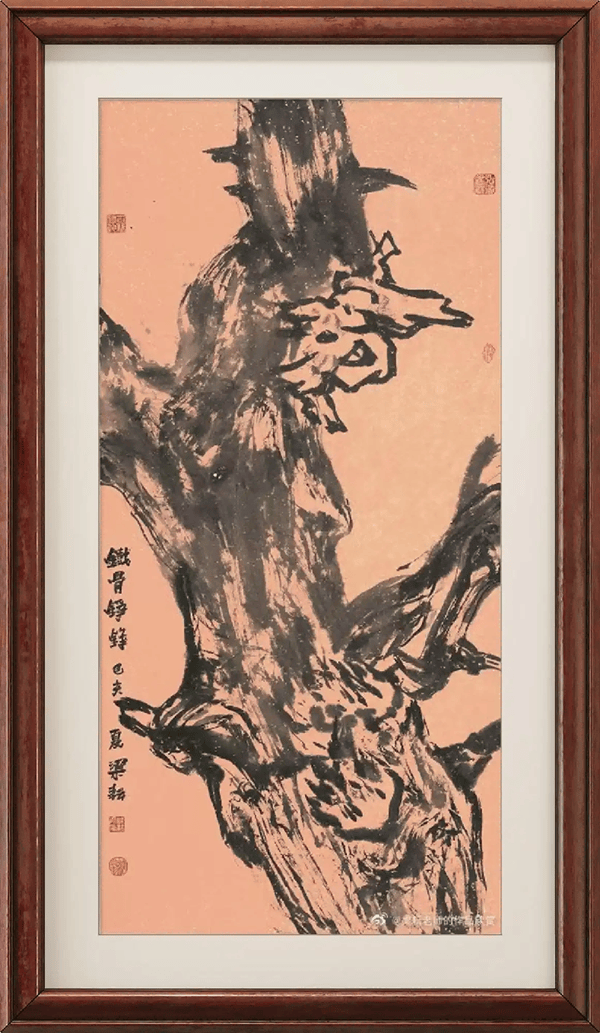
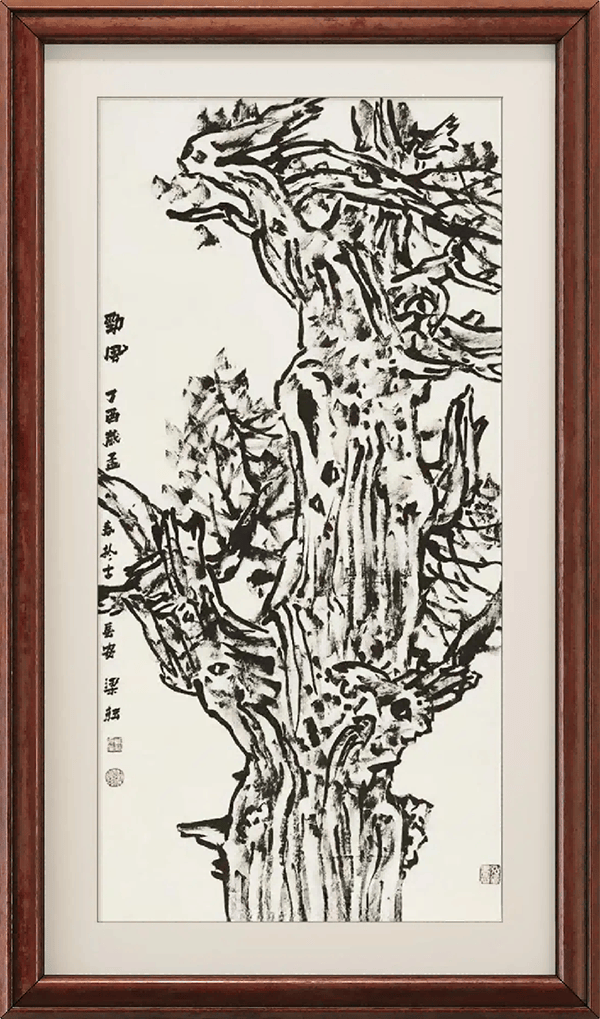
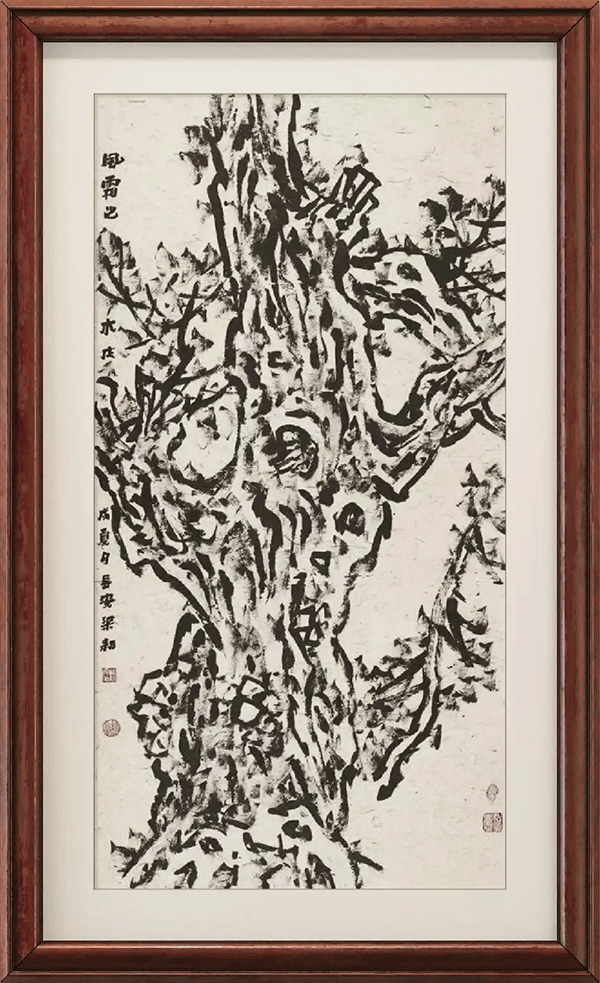
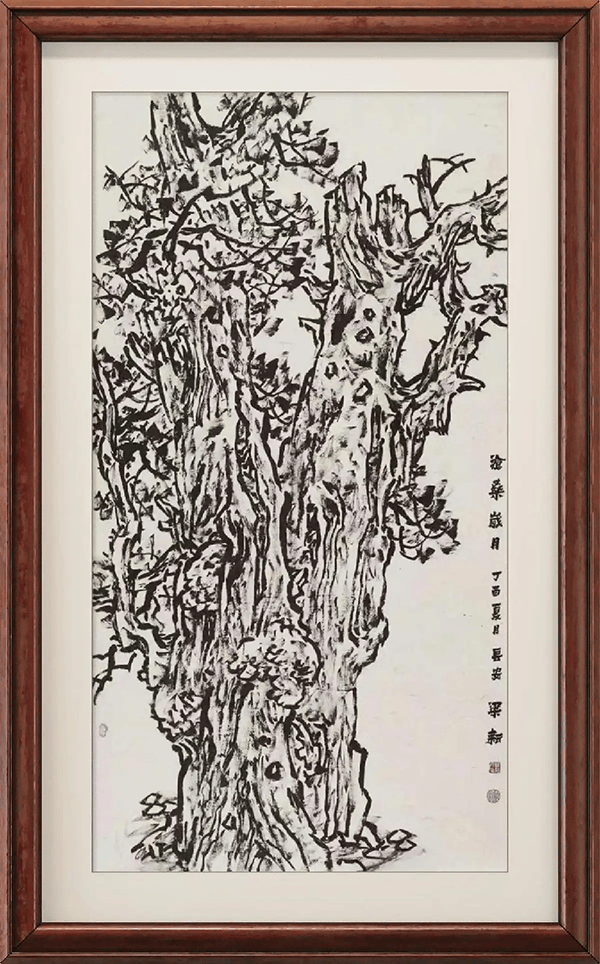
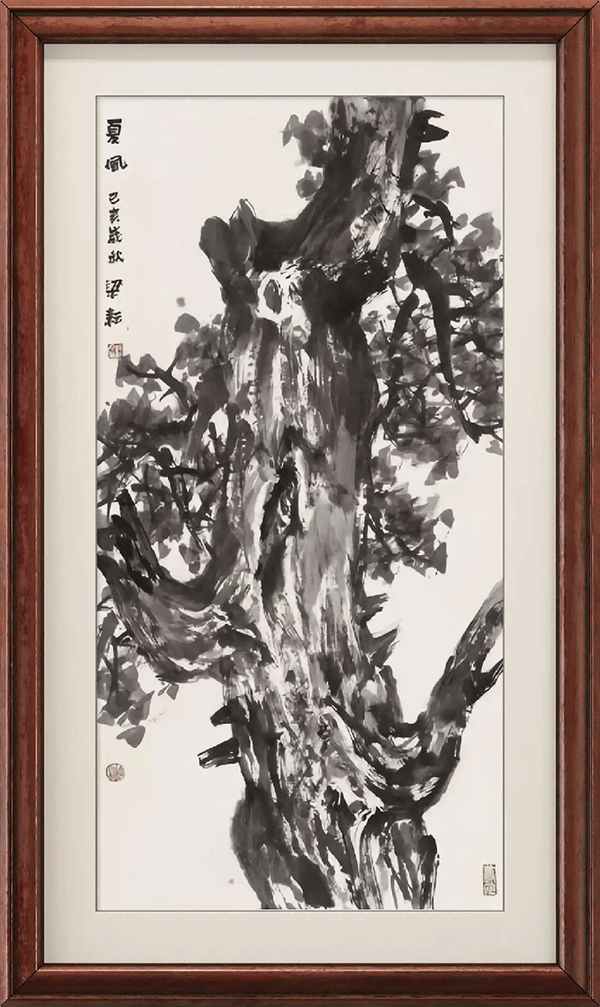
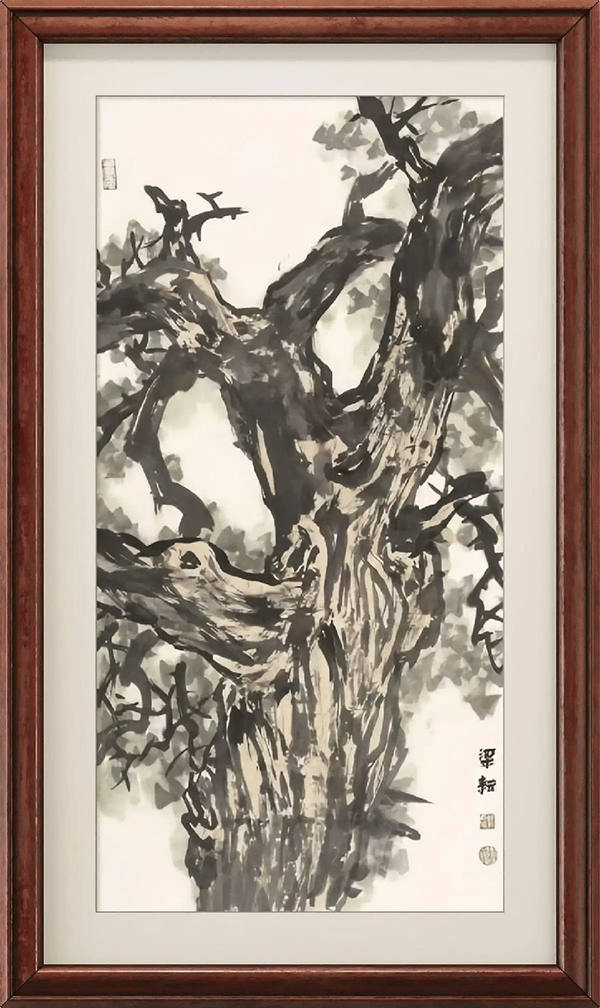
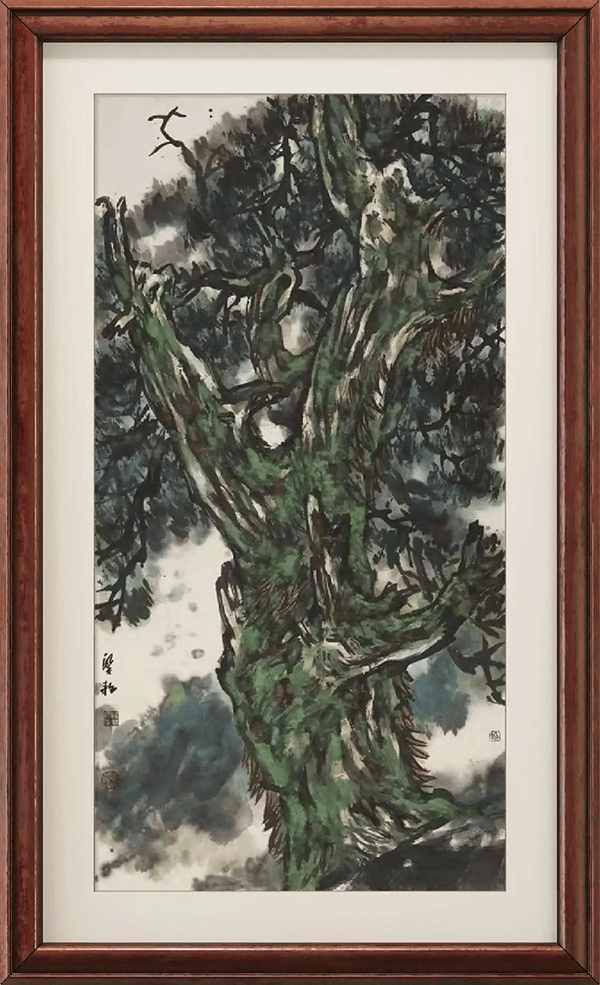
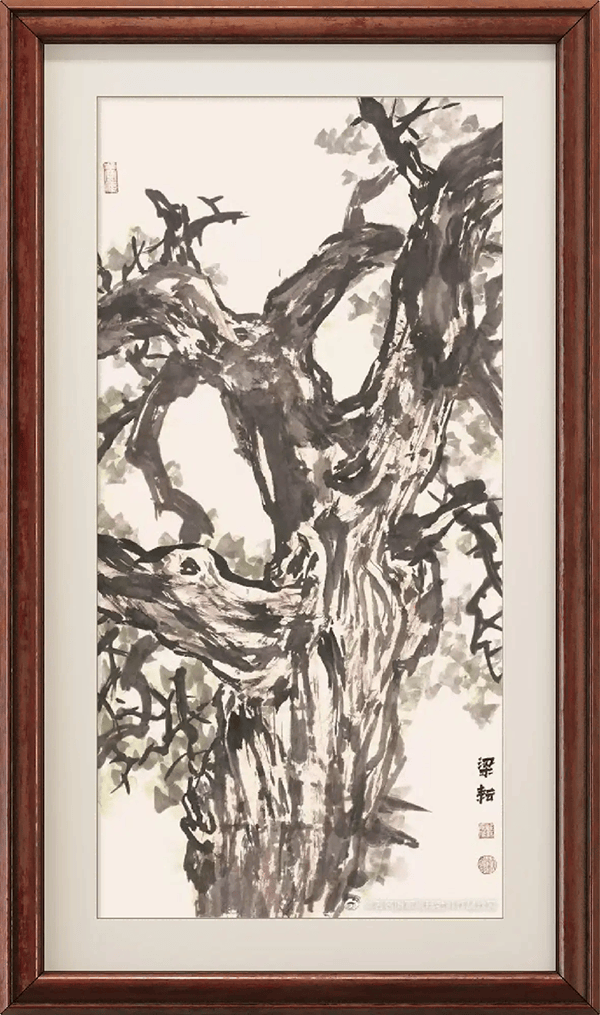
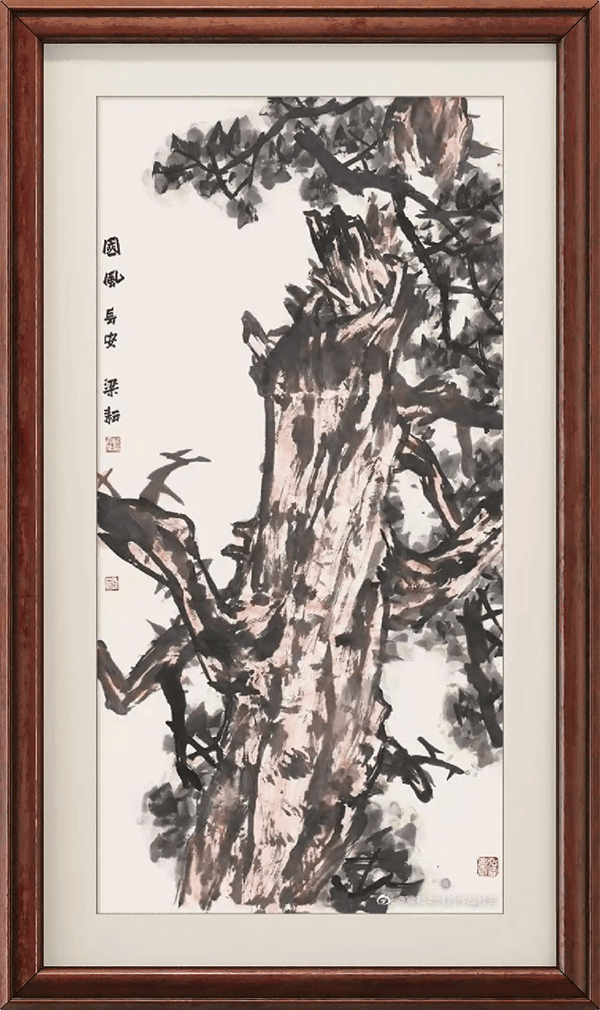
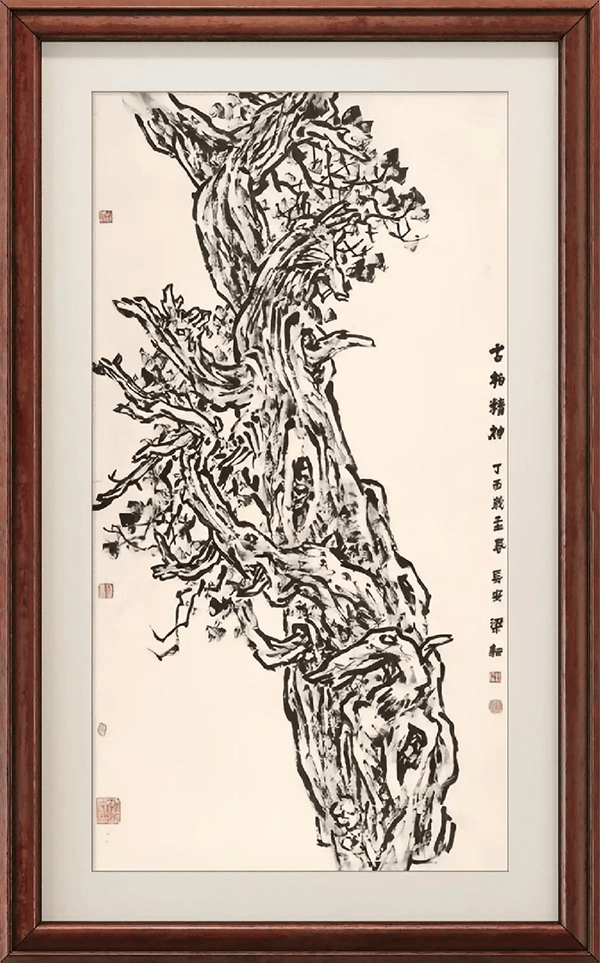
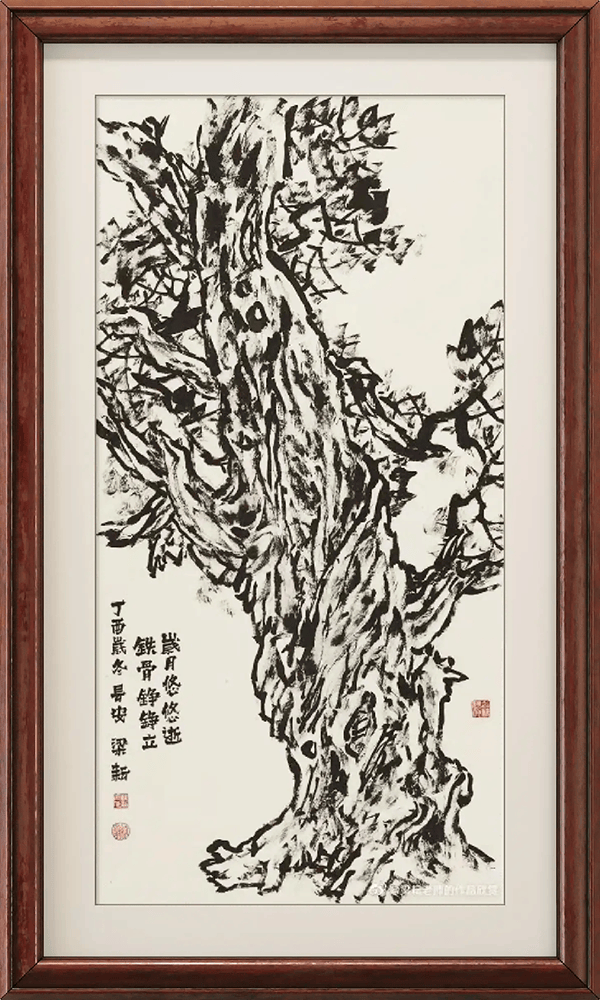
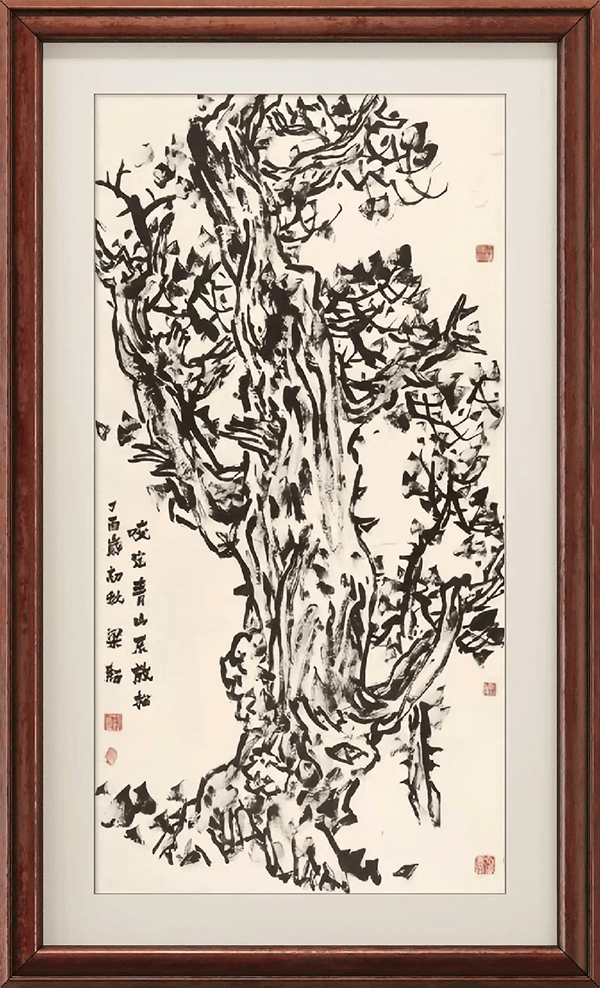
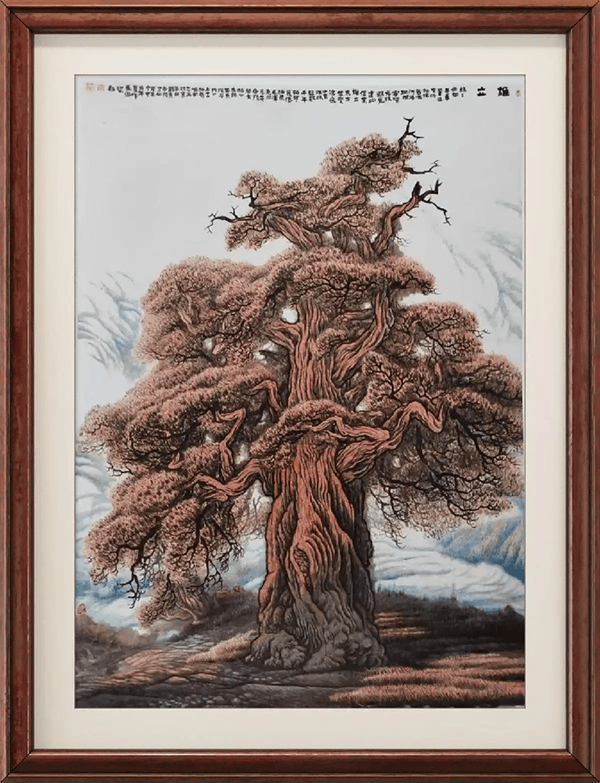
"从黄帝陵千年古柏中提炼民族魂魄,梁耘以独步画坛的焦墨笔法,将扭曲盘结的柏干升华为华夏文明的精神图腾。三十年写生铸就’古柏第一人’,金石铁笔刻出五千年沧桑,每一株’梁耘柏’都是中华民族顶天立地的风骨写照。"梁老师以翰墨搭建文化纽带,推动中国书画走向世界。
Extracting the national soul from the millennia-old cypresses at the Yellow Emperor’s Mausoleum, Liang Yun, with his unrivaled burnt-ink brushwork in the painting circle, elevates the twisted and gnarled cypress trunks into spiritual totems of Chinese civilization. Thirty years of field sketching have forged him as “the foremost painter of ancient cypresses”. His stony, resolute brushstrokes engrave the vicissitudes of five thousand years. Every “Liang Yun Cypress” depicts the upright, unyielding integrity of the Chinese nation.
Mr. Liang builds cultural bonds through brush and ink, promoting Chinese painting and calligraphy to the world.
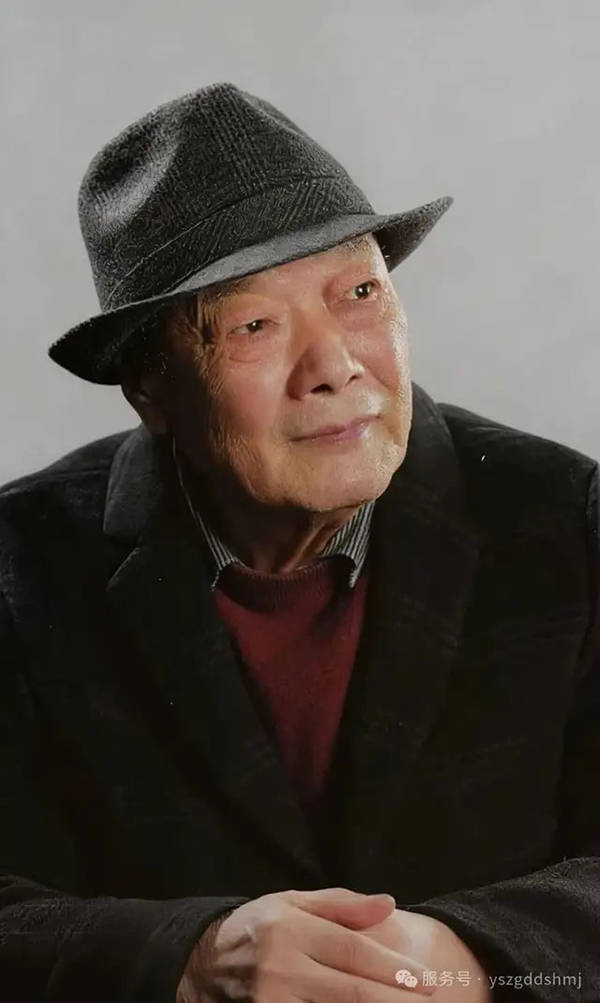
梁耘1943年生于陕西蒲城,当代著名山水画家,国家一级美术师,陕西科技大学教授,后长安画派中坚力量,中国美术家协会会员。一、教育与履历1965年毕业于西安美术学院附中,1970年毕业于西安美术学院,受业于长安画派诸家,师承范宽、沈周、石涛、髡残、龚贤、黄宾虹、潘天寿、石鲁等,传统根基深厚。在陕西科技大学任教期间,长期从事美术创作与教学。现任:陕西省美术家协会顾问、陕西省文史研究馆馆员、陕西省山水画研究会名誉主席、人民日报袭古创今画院名誉院长。曾任:铜川市美术家协会主席,2005年发起创立陕西省山水画研究会并任主席,推动陕西山水画创作与研究走向系统化、学术化。二、艺术转向与创作题材早年主攻人物画,造型严谨、写实功底扎实;1986年起专攻山水,立足黄土高原与三秦大地,形成鲜明地域风格。核心题材:黄陵古柏、照金山脉、渭北莽塬、陕北村寨,兼写华山、陕南山水与西域风光,以山水寄情,以笔墨立魂。艺术符号独树一帜,人称“老笔梁耘”,以“梁耘柏”享誉画坛,被誉为“古柏第一人”。三、艺术风格与语言用笔奇崛老辣、恣肆放纵,以焦墨为主要语言,线条苍劲、墨色厚重、层次苍茫;画风淳厚沉雄、质朴高华,重精神气象、不事雕琢、不媚世俗。作品将黄土高原的雄浑、古柏的苍劲与民族精神融为一体,气象正大、风骨凛然,兼具传统笔墨意趣与当代审美品格。四、重要展览与获奖1992年于陕西省美术博物馆举办个人山水画展,广受业界关注。1994年作品《雄立》入选第八届全国美展。1998年速写长卷《渭北莽塬大岭图》入选全国首届写生展,以扎实写生功底获高度评价。2001年作品《曙光的呼唤》获庆祝建党八十周年美术作品展二等奖。2023年11月,“老笔三变——梁耘山水画展”在北京荣宝斋大厦美术馆隆重举办,系统呈现其渭北山水、黄陵古柏、高原冬雪三大阶段创作成果,是其艺术生涯里程碑式大展。五、学术与社会影响深耕长安画派精神,坚持“一手伸向传统,一手伸向生活”,是当代山水画承前启后的代表性人物。多次荣获“最具收藏价值艺术家”“最具创新力艺术家”等称号。
Liang Yun was born in Pucheng, Shaanxi in 1943. He is a famous contemporary landscape painter, a national first-class artist, a professor at Shaanxi University of Science and Technology, a backbone of the Chang’an Painting School, and a member of the China Artists Association. 1、 Education and Resume: Graduated from the Affiliated Middle School of Xi’an Academy of Fine Arts in 1965 and from Xi’an Academy of Fine Arts in 1970. Studied under various schools of the Chang’an School of Painting, including Fan Kuan, Shen Zhou, Shi Tao, Kun Can, Gong Xian, Huang Binhong, Pan Tianshou, Shi Lu, etc., with a strong traditional foundation. During my tenure at Shaanxi University of Science and Technology, I have been engaged in art creation and teaching for a long time. Current position: Consultant of Shaanxi Artists Association, curator of Shaanxi Provincial Institute of Culture and History, Honorary Chairman of Shaanxi Landscape Painting Research Association, and Honorary President of People’s Daily Inherited Ancient Creation Modern Painting Academy. Former position: Chairman of Tongchuan Artists Association. In 2005, he initiated the establishment of Shaanxi Landscape Painting Research Association and served as its chairman, promoting the systematic and academic development of Shaanxi landscape painting creation and research. 2、 In the early years, I focused on figure painting as my artistic direction and subject matter. I had a rigorous style and a solid foundation in realism; Since 1986, specializing in landscape, based on the Loess Plateau and the land of Sanqin, forming a distinct regional style. Core themes: Huangling Ancient Cypress, Zhaojin Mountain Range, Weibei Mangyuan, Shaanbei Village, and also depict the landscapes of Huashan, southern Shaanxi, and the Western Regions, expressing emotions through mountains and waters and establishing souls through ink and brush. The artistic symbol is unique, known as Lao Bi Liang Yun, renowned in the art world for Liang Yun Bai and hailed as the number one ancient cypress. 3、 The artistic style and language are characterized by bold and unrestrained brushstrokes, with a focus on the use of burnt ink as the main language. The lines are vigorous, the ink color is heavy, and the layers are vast; The painting style is pure and dignified, simple and elegant, with a focus on spiritual atmosphere, without any embellishment or flattery towards the world. The work integrates the magnificence of the Loess Plateau, the vigor of ancient cypress, and the national spirit, with a grand and majestic atmosphere, combining traditional brushwork and contemporary aesthetic character. 4、 Important exhibitions and awards: In 1992, a personal landscape painting exhibition was held at the Shaanxi Provincial Museum of Fine Arts, which received widespread attention from the industry. The 1994 work ’Xiongli’ was selected for the 8th National Art Exhibition. In 1998, the sketchbook The Great Mountains of the Wei Bei Mangyuan was selected for the first national sketching exhibition and highly praised for its solid sketching skills. The 2001 work ’Call of Dawn’ won the second prize in the art exhibition celebrating the 80th anniversary of the founding of the Communist Party of China. In November 2023, the Three Transformations of Old Pen - Liang Yun Landscape Painting Exhibition was grandly held at the Rongbaozhai Building Art Museum in Beijing, presenting his three major stages of creative achievements: Wei Bei Landscape, Huangling Ancient Cypress, and Plateau Winter Snow. It is a milestone exhibition in his artistic career. 5、 Academic and social influence deeply cultivate the spirit of Chang’an Painting School, adhering to the principle of reaching out to tradition with one hand and reaching out to life with the other. He is a representative figure of contemporary landscape painting who carries forward the past and opens up the future. Has won titles such as Most Collectible Artist and Most Innovative Artist multiple times.

雄浑苍劲之美 —— 梁耘的山水画
邵大箴
读了梁耘君的水墨画,听他兴致勃勃地讲述他的艺术经历和一些作品的创作过程,我很感动,也很佩服。这是一位诚实、勤奋、执着、有悟性和创造精神,又非常谦虚的艺术家。画家不论天分高低,真正成功的关键在于能否坚持辛勤地劳作和不断深入思考前进中遇到的问题。张大千说过,在画家成长过程中,最重要的是理想、兴趣、爱好、路子正和坚持不懈的实践,由此领悟艺术的原理,做出引人注目的成绩。梁耘艺术成长和取得成功的过程,也充分说明了这一点。
梁耘在西安美术学院受过系统的艺术训练,接受的是中西融合的绘画教育,在学生年代,他练就了扎实的造型能力。早期对中西绘画均有所涉猎,80 年代初曾有油画作品参加全国性展览并获奖,之后主要从事中国画创作,几十年专心致志地画他心仪的渭北高原苍劲雄浑的自然景色,一面发挥他的写生特长,一面努力钻研传统中国画,练习书法,领略传统中国画平面造型和计白守黑的原理,在笔墨上狠下功夫,并努力把西画写实技巧融合在笔墨之中,终于创造了具有鲜明个性特色的绘画风格。
绘画不论中西,选择素材和描写对象并非无关紧要,即使风景、山水也不例外,因为画别人未画过的景象本身便有一定的意义。当然,绘画创作除了选择合适的表现对象,还必须要有相应的绘画技巧承载丰富的文化内涵,才能站得住脚。梁耘一心迷醉的是横亘于渭北高原之上的山脉 —— 处于恶劣自然环境的 “北山”,而不是水源丰富、林木繁茂的 “南山”(终南山),便说明他对幼年生活的如是环境有难以磨灭的恋情。故土滋育了他的趣味爱好和审美眼光,培养了他能在困难生存环境里倔强地显示生命力的草木山石中,发现豪迈阳刚之气和雄浑、壮阔、苍茫的大美。他坚信北山山脉照金山景色便是范宽的《溪山行旅图》的自然范本,由此更坚定了他为发掘、表现和传播这些雄健、刚毅、有勃勃生机自然景象的决心。
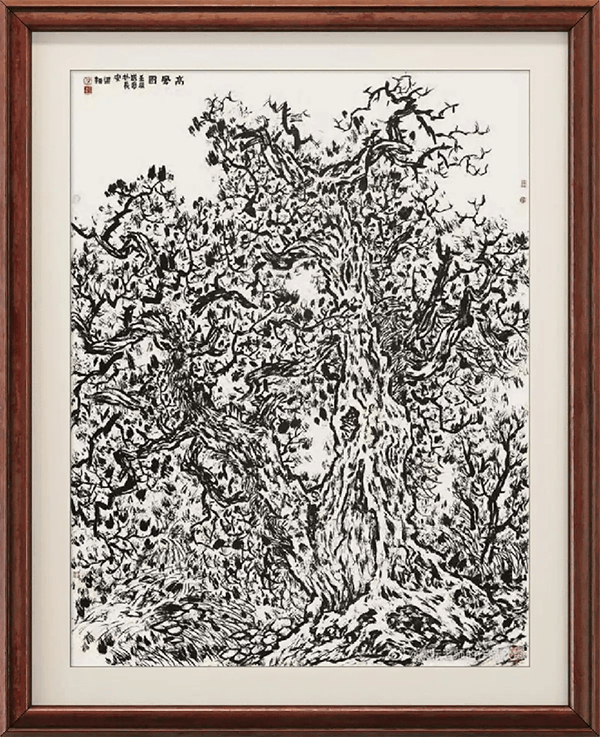
可以用乐此不疲、锲而不舍来形容梁耘的这段漫长的绘画实践。一位艺术家在一个地域反复经营同一类题材,描绘类似的景物,如果没有一种理想支撑是难以想象的。那一棵棵粗实、雄壮的古柏,以及它们呈现出的各种曲折苍健的姿态,传达出它们在与干旱、风沙顽强搏斗中茁壮成长的经历,象征着陕北高原劳动人民坚强的勇气和毅力。梁耘写的是古老柏树,是山峦、窑洞,是莽莽野林,却在它们身上揭示一种自强不息的精神,他也因此得到深深的激励与鼓舞,驱使他甘于寂寞地在这里默默耕耘数十年。
为人诚实憨厚的梁耘,一心要把他生于斯长于斯的这片故土所包含的力和美,用自己的绘画作品表现出来。他在创作过程中逐渐体会到,所谓有个性的绘画风格是在长期艺术劳动中自然形成的,其中最重要的是画自己面对大自然的真切感受,不模仿古人,不追慕时尚。这也正是梁耘为人直率、坦诚和憨厚的性格所决定了的;而他这位陕北高原汉子所具有的宽阔心胸和质朴品质,也与苍茫雄浑的大自然心心相印。因此,当他掌握了传统国画的规则和技巧之后,他的水墨艺术创作的个性面貌便逐渐显示出来:在粗实、厚重中显示律动和韵味,在苍劲、雄浑中展示灵性和生气,作品展现出醇厚华滋的面貌。大概由于他认为有千年生命的古柏最能表现他的审美理想,为它们造像的作品在他创作中占有很大的比重。
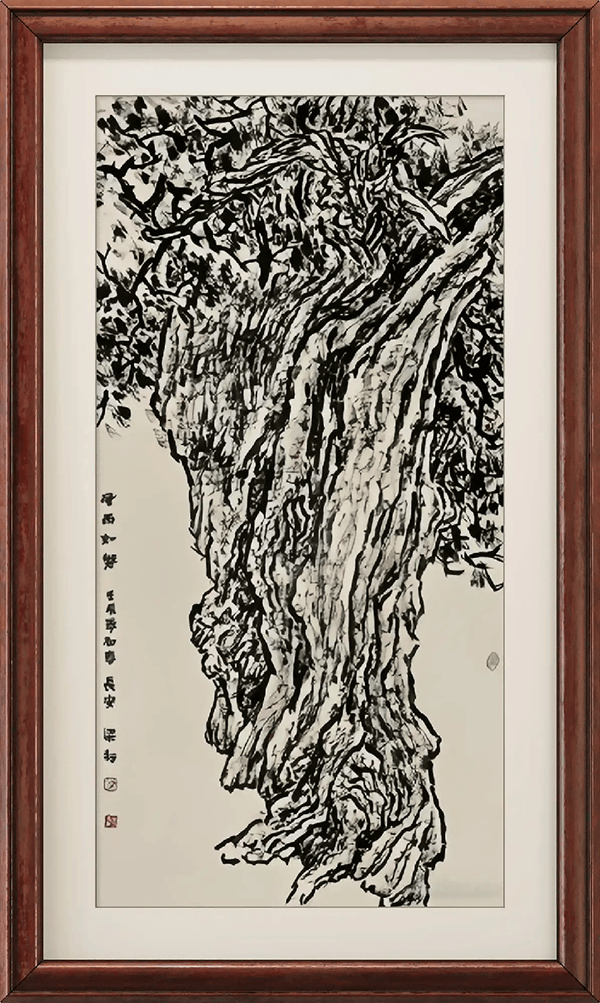
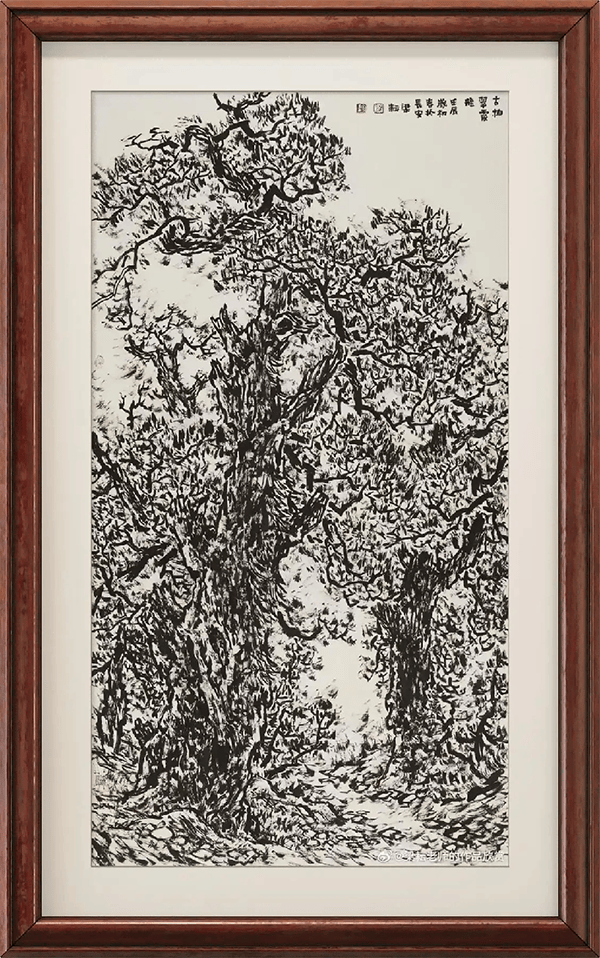
梁耘对焦墨情有独钟,焦墨是有很多限制的一种水墨艺术,它要在枯笔、渴笔、竭墨中表现笔墨的一种特质美,显示笔墨语言深沉浓黑的刚健质朴的内在力量。梁耘通过笔力笔锋的运动,使焦墨的点线轻重、粗细、刚柔形成微妙的变化,以及充分利用黑白关系,赋予醇厚的焦墨以难得的滋润,造成丰富的画面效果。我认为,他的焦墨山水创作是他艺术创作的高度提炼,充分反映出这位雄浑苍劲之美歌手的艺术成就。
梁耘的艺术创作受到业界的高度评价和广大观众的赞赏,但他始终保持一颗平常心,保持谦逊的态度。不顾进入古稀之年,他仍然不断锤炼自己的艺术,向新的高度攀登。梁耘的艺术成就和他的这种品质和精神,在浮躁风弥漫的美术界,值得我们学习,值得点赞!
The Beauty of Power and Vigour — Liang Yun’s Landscape Paintings
Shao Dazhen
After reading Liang Yun’s ink paintings and listening to him speak enthusiastically about his artistic journey and the creation process of some works, I was deeply moved and greatly admiring. He is an honest, diligent, persistent artist with insight and a creative spirit, as well as remarkable modesty. Regardless of innate talent, the key to a painter’s true success lies in whether they can keep working diligently and continuously reflect deeply on the problems encountered along the way. Zhang Daqian once said that in a painter’s growth, the most important elements are ideals, interests, passions, the right path and persistent practice, through which one can grasp the principles of art and achieve remarkable results. Liang Yun’s artistic growth and success fully illustrate this point.
Liang Yun received systematic artistic training at Xi’an Academy of Fine Arts, where he was educated in an integrated Chinese-Western painting approach. During his student years, he developed solid modelling skills. In his early days, he explored both Chinese and Western painting. In the early 1980s, one of his oil paintings was selected for a national exhibition and won an award. Thereafter, he focused mainly on Chinese painting. For decades, he devoted himself wholeheartedly to painting the rugged, grand natural scenery of the Weibei Plateau that he cherished. Leveraging his strengths in sketching, he delved into traditional Chinese painting and practiced calligraphy, comprehending the principles of planar composition and the interplay of void and solid in classical Chinese painting. He strove hard in brush and ink techniques, and integrated Western realistic painting skills into his brushwork, eventually developing a highly distinctive painting style.
Whether Chinese or Western, the choice of subject matter is by no means trivial, and landscape painting is no exception. Depicting scenes rarely painted by others carries inherent significance. Of course, beyond selecting suitable subjects, painting creation requires corresponding techniques to carry rich cultural connotations so that works can stand the test of time. Liang Yun is utterly captivated by the mountain range stretching across the Weibei Plateau — the “Northern Mountains” that endure harsh natural conditions, rather than the resource-rich, lush “Southern Mountains” (Zhongnan Mountains). This reveals his enduring affection for the environment of his childhood. His native land nurtured his aesthetic tastes and vision, enabling him to discover heroic masculinity and the grandeur, vastness and solemn beauty of plants, trees and rocks that stubbornly cling to life in difficult surroundings. He firmly believes that the Zhaojin Mountain scenery of the Northern Mountains served as the natural prototype for Fan Kuan’s Travelers Among Mountains and Streams, which strengthened his resolve to explore, portray and spread these powerful, resolute and vibrant natural scenes.
Liang Yun’s long artistic practice can be described as tireless and persistent. It would be inconceivable for an artist to repeatedly explore the same theme and similar scenery in one region without the support of ideals. Those sturdy, magnificent ancient cypresses, with their twisting, robust forms, convey their struggle to thrive amid drought and sandstorms, symbolizing the courage and perseverance of working people on the northern Shaanxi Plateau. Liang Yun paints ancient cypresses, mountains, cave dwellings and wild forests, yet he reveals a spirit of constant self-improvement within them. He draws profound inspiration from these subjects, driving him to quietly cultivate his art in solitude for decades.
Honest and simple by nature, Liang Yun is determined to express the power and beauty of his homeland, the place where he was born and raised, through his paintings. In the course of creation, he gradually came to understand that a distinctive artistic style emerges naturally through long-term artistic labour. Most importantly, he paints his genuine perceptions of nature, without imitating ancient masters or chasing fashion trends. This is shaped by his straightforward, sincere and unassuming character. His broad mind and plain qualities, typical of a man from the northern Shaanxi Plateau, resonate deeply with the vast, powerful natural landscape. Therefore, once he mastered the rules and techniques of traditional Chinese painting, the individuality of his ink art gradually emerged: rhythm and charm within solid, substantial forms, vitality and spirit within rugged, grand compositions, lending his works a rich, mellow quality. Perhaps because he believes ancient cypresses that have lived for a thousand years best embody his aesthetic ideals, paintings of these trees account for a large share of his creations.
Liang Yun has a special fondness for burnt ink. Burnt ink is a restrictive form of ink art. It seeks to express a unique formal beauty using dry brushes, parched strokes and depleted ink, revealing the profound, dark, powerful and unadorned inner strength of ink language. Through the movement of brush force and tip, Liang Yun creates subtle variations in the weight, thickness, firmness and softness of burnt ink dots and lines. He also makes full use of the relationship between black and white, endowing the rich burnt ink with a rare moist quality and generating layered visual effects. I believe his burnt ink landscape paintings represent the refinement of his artistic creation, fully reflecting the artistic achievements of this singer of rugged, powerful beauty.
Liang Yun’s art has earned high recognition from the art circle and acclaim from audiences, yet he always maintains a calm mind and humble attitude. Even in his seventies, he continues to refine his art and climb toward new heights. Liang Yun’s artistic accomplishments, together with his character and spirit, deserve our learning and praise in an art world pervaded by impetuosity.